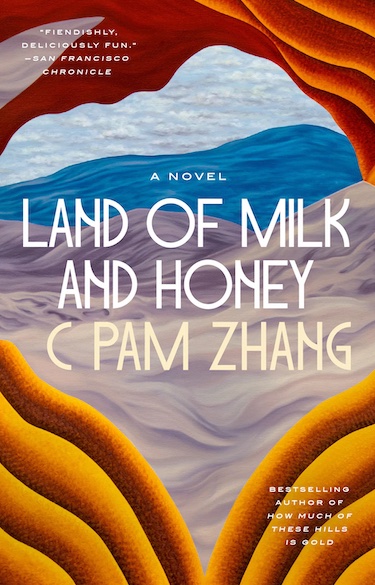
C. Pam Zhang’s second book, The Land of Milk and Honey (Riverhead Books), is speculative fiction, both virtuosic and exhausting in its use of language. Strings of phrases, lists of foods, and unflinching records of cruelties and disasters are flung at the reader. Set in the (oh-god-please-no) near future, it describes a disastrously smog-filled world where crops have failed and the basic food is “the mung-protein-algal flour distributed by the government.” The narrator, whose name we never learn, is a young Asian-American woman, who applies for a position as chef in a research community funded by a reclusive billionaire and located on an Italian mountaintop. The appeal of working in a compound where seeds have been saved, and where the best livestock is bred and tended, is obvious, seductive. The billionaire is—surprise—villainous. His complexion suggests makeup or a spray-on tan. His voice is coarse. He is awkward in speech and manner but crude in exerting power. We may be able to imagine such a person. The food descriptions are positively sexual (the skin of strawberries is “yielding as a woman’s inner thigh; oysters are “swollen through butter”). The wealthy investors lured to the compound eat feasts of excess (Bresse chicken “stuffed with truffles and foie, steamed inside an inflated pig’s bladder” soaks in a bath of Madeira and Armagnac). There are rarer, grosser foods that cause the diners to vomit—and then to be thrilled by their own daring. There is a hunt of endangered animals reminiscent of Oscar Wilde’s description of a fox hunt (“the unspeakable in full pursuit of the uneatable”). There is a climactic scene redolent of recent tragedies and current hubris. Zhang manages a fine balancing act, periodically veering over the edge into absurdity without alienating the reader—though I think a strong-minded editor would have trimmed away much of the narrator’s life, post-denouement, as the chef’s remaining experiences don’t provide a lot of sustenance. —Angela Runnals
SIGNUP TO OUR NEWSLETTER

SIGN-UP TO OUR NEWSLETTER