There’s power in a name. Yours is common, an easy bet in any graveyard. Sometimes there are more options than I care to consider: lavish monuments with butter soft carvings of cloth and angels, shabby rectangular stones shot through with cracks, polished plaques on brick walls, eroded lumps of rock with the faintest impression of letters that won’t likely last another century. There’s a cemetery in Toronto named after the same saint that you were, which led me to the discovery of endless other such cemeteries across the country. Your name is grieved everywhere. By many accounts this means that you are grieved everywhere. In Fredericton and Charlottetown and New Glasgow and Pembroke, in every hospital and house of worship—certainly everywhere that I go.
The oldest cemeteries I’ve been to are some of the worst kept. Patches of dirt branded with bike tracks scab the weedy grass. Broken chunks of stone and rotting garbage rest in place of flowers on the graves of families who began to die off over two hundred years ago. Standing before half a headstone, the names long smashed into dust, I feel as though I should be able to turn to somebody to express my gut feeling that this is wrong—but there’s never anybody there with me.
I give different speeches depending on the day. Depending on whether you’re dead or you’re still out there somewhere, depending on whether you’ve been trying to get back to me or you’ve left me behind, depending on how tender my heart feels when I wake up in the morning and how I slept the night before. Sometimes I’ll be there long enough to watch the shadows creep from gate to gate and sometimes I won’t even stop walking.
Monday: It’s lovely out today. The sun is warm, but the leaves are orange and I’m left shivering when the wind blows. Sunsets are showing up early with gifts of hot chocolate and blankets to pull over our laps. The world is nice to live in. Later there will be roast chicken and sweet beer and hours of laughter. The extra seat at the dining table is yours if you want it. I’ll leave the front door unlocked.
On Tuesday you get a moment’s glance. I don’t even step off the path.
Wednesday: I’ve forgotten the lines of your face and I’m afraid I won’t recognize you if I pass you on the street. You’ve been a ghost far longer than you were a living, breathing part of my life. The people I spend my days with have never met you, have never even seen a photo. They look at me strangely when I mention coming here. I am beginning to feel crazy.
On Thursday I busy myself in the world of the living. A long day spent selling cupcakes to immaculately groomed people on Bloor West blurs into catching up with old friends under a sunset in Riverdale Park. On Friday the family of the stranger who shares your name is visiting the grave I’ve been borrowing, so I circle the grounds slowly and decide it might be time to find a new cemetery. A year will pass before I find you again, this time in a different province.
There’s also power in knowing. When hope crawled out of Pandora’s box it screamed and screamed with perverted delight, jonesing to taste exactly the note of discord that rings in my throat when I say you are dead, because it’s simpler than saying you’re missing, or just gone. That rancid aftertaste is because I am afraid that I am lying. I don’t know what else to call that fear but a vestige of hope.
People can understand death. They can just as easily understand a man walking away. It’s harder to settle on any finite reaction to somebody disappearing because there is no finality. There isn’t the luxury of putting anything at all to rest or of moving on when that ghost could walk back into your life at any moment, when the shock of a body turning up—warm or cold—is an active threat. Not knowing leaves you indefinitely trapped in the jaws of tragedy with nothing to do but wait for a snap that may never come. Not knowing has me kneeling before graves of people I’ve never met.
You had been gone for years already when I tried to reach out with a Ouija board. Fatherless little girls tend to be granted their eccentricities, and a fascination with ghosts was one of mine. We played in a park beside a graveyard in the middle of a summer night, me and a ragtag group of middle-schoolers. When the planchette failed to respond after we tried three different questions, the others were ready to move on to more gratifying forms of trouble. But I made everybody say goodbye first, and slid the planchette to the bottom of the board myself when the spirits we all agreed were bullshit failed to do it on their own. Just in case, I said, telling myself the others were laughing with me. I was not aware that nobody else present believed that gone things, gone people, could really return. I had suggested we play in the park ostensibly because the streetlights were closer and the game relies on being able to read what the spirits spell out on the board. Truthfully, I was too afraid to play in the graveyard because I thought something or someone inside those gates might really hear us, might really come back. I didn’t know it yet, but hope was there, tearing up and down on the swings across the park, screaming and screaming.
Someday I’m going to take a walk through a graveyard and the jaws will snap. Your body will be in the ground. Or maybe you’ll finally stand up from where you’ve been crouching behind the headstones, giggling at my delivery of “Goodbye: version two hundred and sixty-four” to a dead stranger who shares your name.
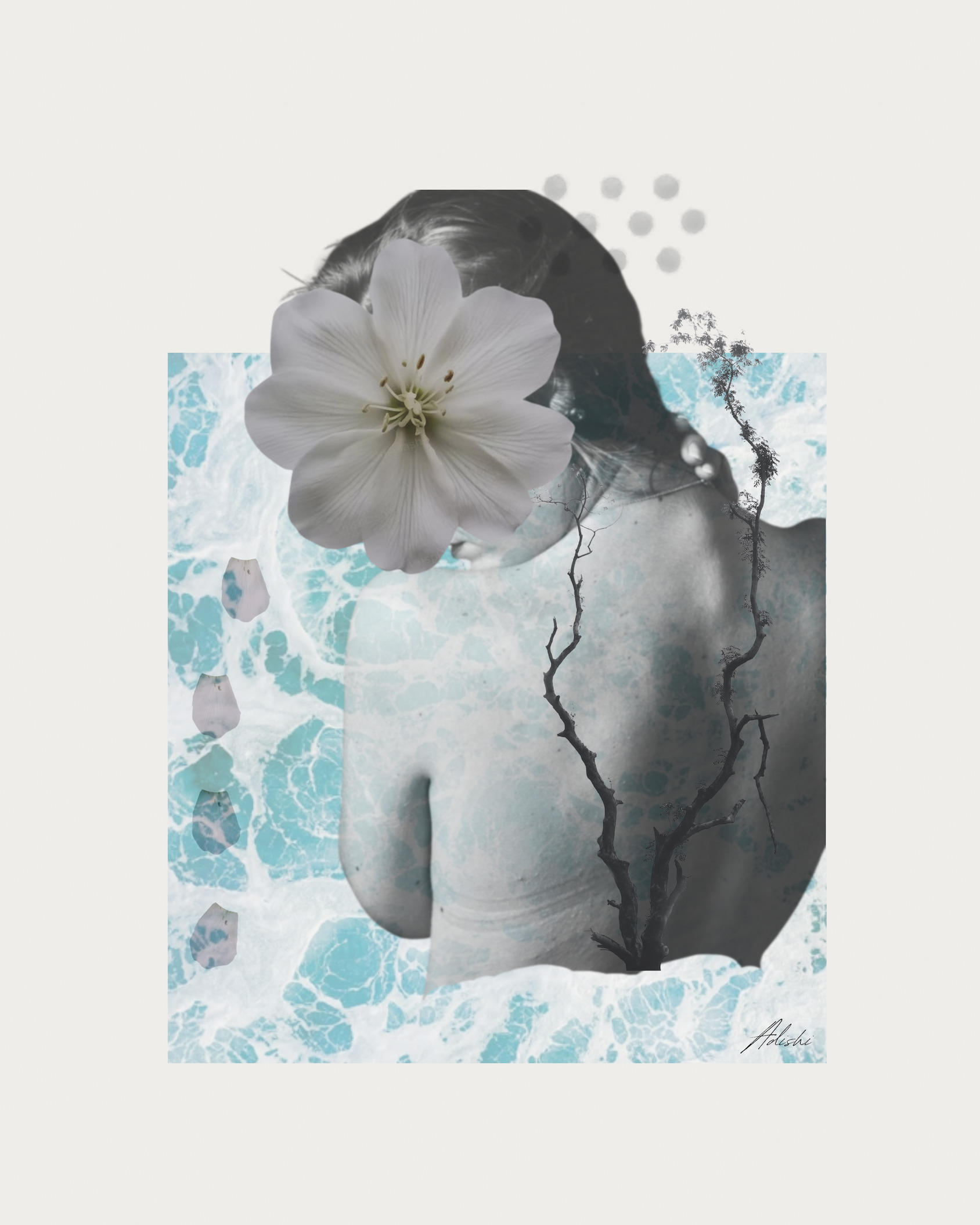
Image: James LaBounty, A Serendipitous Encounter, 2024, digital photography

Courtney Buder lives on the East Coast of Canada. Their work appears or is forthcoming in Room magazine, the Queen’s Quarterly and elsewhere. Find them on Instagram @courtneybuder.
SIGNUP TO OUR NEWSLETTER

SIGN-UP TO OUR NEWSLETTER