When the tide gets low at Kitsilano Beach in Vancouver, a big chain becomes visible. It’s stuck right into the sand, deep enough that I think they’d need to bring in some heavy machinery if it ever needed to be removed. I don’t know what it was put there for. The chain is constantly corroding, but never enough to break loose from whatever anchors it. One time, I pulled a traffic cone from the shore at low tide because it was filled with sand, and I imagined a fish swimming into the wide end and not being able to turn around. A nature documentary once told me that sharks can’t swim backwards, and this was enough to convince me that the cone needed to be removed before the tide came back in.
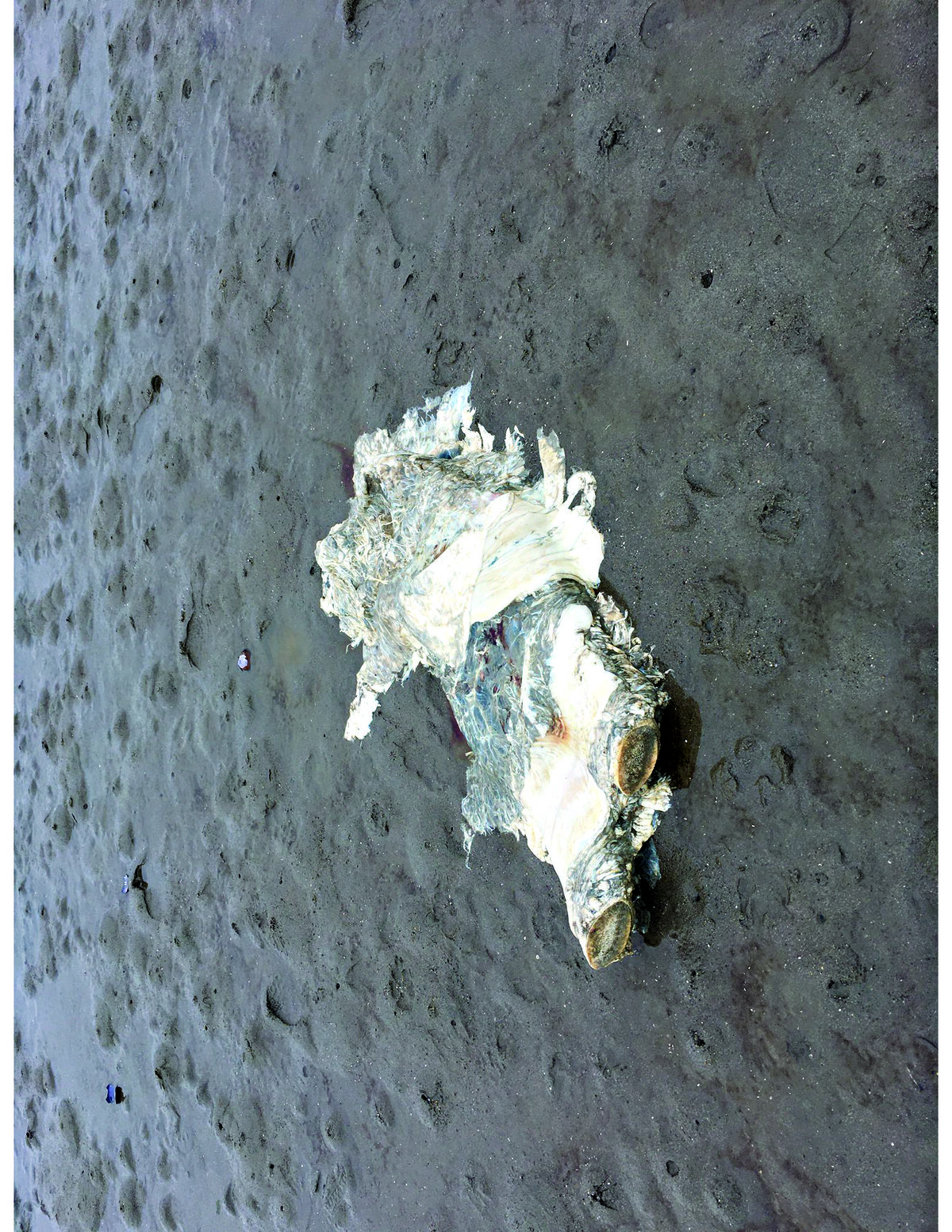
In April 2021, the tides went out more than usual and I found a pair of ribs. They were big and appeared severed and were surrounded by the paw prints of curious dogs who had no doubt smelled something entirely new. The ribs were too big to belong to anyone except a whale.
The problem was that I only had a half hour for lunch. I wasn’t eating lunch in those days, which meant that I could maximize my thirty minutes with a brisk walk to the beach and back. I didn’t tend to have many Teams calls scheduled in the afternoons, so it didn’t matter if I sometimes returned with wet hair from the rain. But half an hour is not long enough to deal with whale ribs.
The day of the ribs was wet. I saw them as soon as I reached the beach—an unfamiliar whitish-grey mass in the sand, a few dozen metres farther out than the rusting chain. About three feet long, and each rib five or six inches wide. They had oily, gunky fat all over, but they didn’t smell. I thought, a week later, about ambergris, a valuable and extremely rare by-product of whales. I selfishly wondered if the ribs could be worth thousands of dollars. But when I looked it up, I found that ambergris only comes from sperm whales. I decided it was unlikely that these ribs belonged to a sperm whale, since I can only ever picture sperm whales in deep waters off continental shelves, but I suppose it was unlikely for these ribs to be on the beach at all.
I texted my sister, who agreed that they were whale ribs, and my brother, who suggested a rorqual whale. I knew what that meant because when my brother was small, I would babysit him and all he wanted to watch was documentaries about whales. He graduated from the childish ones quickly, though not quickly enough to prevent me from watching them all front-to-back a dozen times. One documentary featured a captive beluga named Bubbles who told an entire segment through song, and it still plays in my head when I think about whales in captivity. There was no musical number in the Challenge of the Seas series, hosted by the Hollywood actor Ted Danson. I was too young to know about the TV show Cheers, so for years I thought that Ted Danson was a leading marine biologist.
A rorqual whale is basically a whale with baleen instead of teeth: fins, humpbacks, minkes. Grey whales are in the mix, too, though they aren’t always considered rorqual. I won’t get into why. The important thing is that according to my brother, who I have come to trust entirely on all things cetacean, these ribs didn’t belong to an orca or a dolphin. I wanted to conjure the truest image possible of this leviathan I had found a part of.
The ribs were somewhat mangled. It looked to me like someone had cut them, but I don’t know what could have done that. In all that time babysitting, I never learned what happens to the body when a whale dies at sea. Ted Danson hadn’t prepared me for this. The cross-section of the ribs showed tiny holes and now I wish I’d rapped against them with a knuckle so that I could know the sound.
My lunch break was over. I went home. I sat at my work-from-home desk and knew that by the time I clocked out at four, the ribs would be back underwater. I put a photo of the whale ribs in our marketing Teams chat and one of my colleagues typed, “Ew!” I could barely work all afternoon. I wanted to be back on the beach with the ribs. I returned at low tide every day for a week and never saw them again.
Every year, I spend a few hours thinking about the ribs and wonder if I should have called someone, though I have no idea who, exactly, I could have called. There’s no emergency number for bones, right? But what if the whale had been tagged and unaccounted for, and some biologist could have extracted the DNA and analyzed it and cried out, “It’s Minke 45B! We know her fate at last”? What if those ribs were the last of her?
I could have called in sick that afternoon. I could have dragged them up the beach, carried them home. I’d have cleaned them up and sat them on my kitchen table atop my oldest beach towel, the one embroidered with The L Word’s TV show logo. I would have called the museums and the aquarium then and asked if they wanted the ribs. They’d have come by and looked and told me how incredible the ribs were, how thoughtful I was to keep them, that they were mine to keep forever, and that Minke 45B was grateful for the care I had shown her remains. I’d still have them today, and I’d treat them like a holy relic of a giant, baleen saint.
Image: Gráinne Downey, Whale Ribs, Kitsilano Beach, 2021, photo taken with iPhone
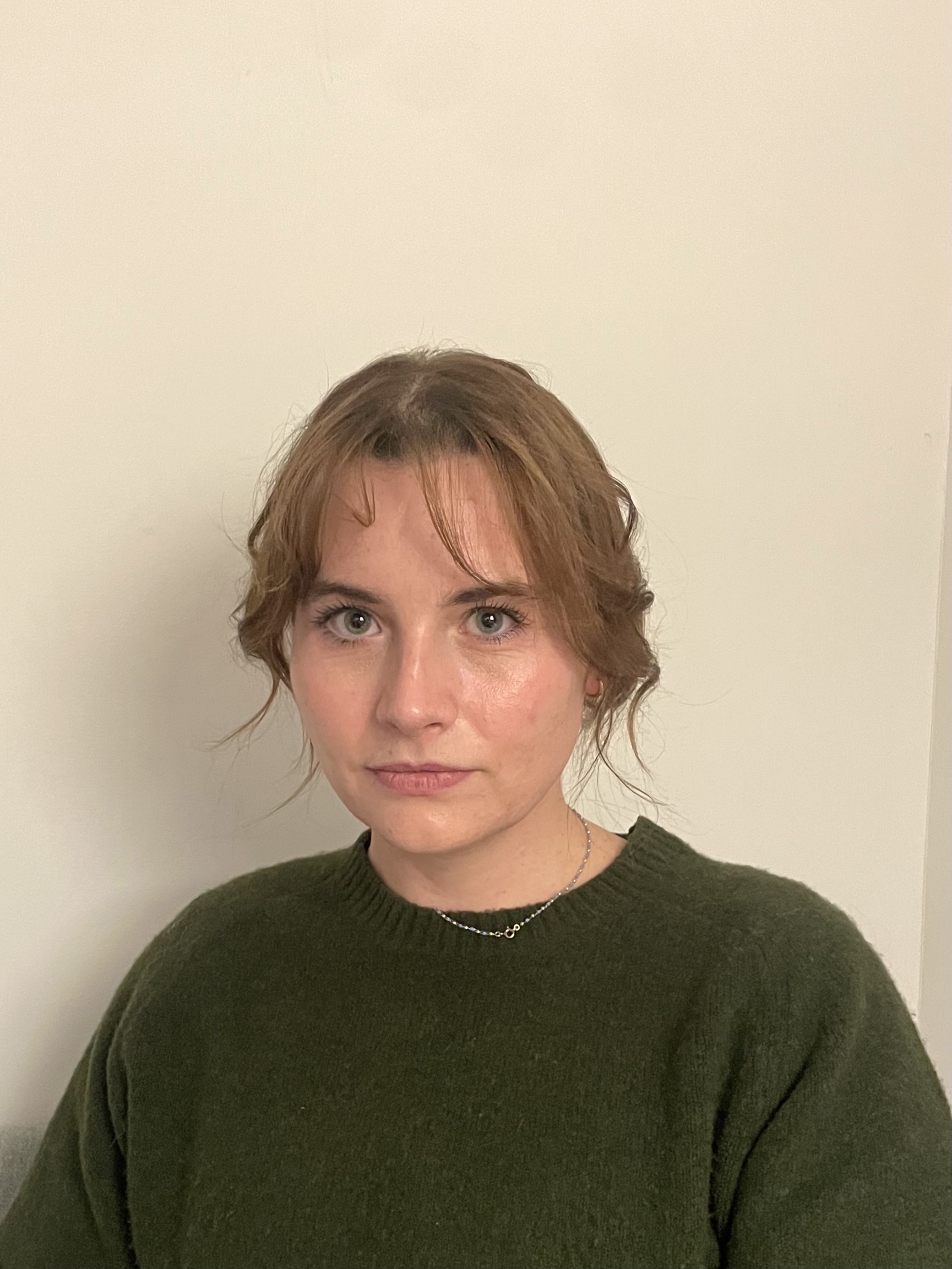
Gráinne Downey is a Canadian writer and visual artist living in Vancouver, Canada, on the traditional, unceded territory of the Musqueam, Squamish and Tsleil-Waututh people. She is currently pursuing an MFA in Creative Writing at the University of British Columbia.
SIGNUP TO OUR NEWSLETTER

SIGN-UP TO OUR NEWSLETTER