My husband had Strathcona in his blood. That small neighbourhood just east of downtown Vancouver, where the smell of ginseng once mixed with the sound of clattering mah-jong tiles. A place inhabited by Canadian immigrants and the past lives they brought with them. We moved into a one-bedroom apartment near Chinatown, which overlapped with Strathcona. He was eager to talk about his old neighbourhood. Having grown up where the lampposts were painted red, my husband knew where everything was and where almost anything used to be. Every street corner came with a story from the time he was a kid. I enjoyed hearing them all.
He’d point out where he and his dad used to look for clams in Crab Park on our afternoon walks. There was a building nearby that once exclusively showed Chinese films. Watching movies there was one of the few things he and his father used to do together, apart from work. As they got older, all they did together was work.
Walking deeper into the residential areas, amongst the beautiful heritage homes and gardens, my husband recalled specific houses. One had belonged to an old high school teacher whose son was in the same grade as him. After school, they’d hang out—not to smoke or play video games—but to drink tea, listen to jazz and read comic books. My in-laws lived minutes away from our apartment, and directly behind their co-op was the Chinese school my husband attended as a child.
Once in a while, he and I would go into Benny’s Market on Union Street. The lady at the front recognized him, but neither knew the other’s name. Still, the exchange rarely deviated: my husband would hold up two sandwiches (no mayo, but extra hot mustard) while I went around the aisle to grab two cans of soda. Sometimes, my husband asked for a lottery ticket and a handful of arugula. There was always a big bag of it at the till. A generous handful of the curly leaves in a small plastic bag lasted long enough in our fridge. (We could never finish those big boxes sold at grocery stores.) When Benny passed away in 2019, I think it broke my husband’s heart a little bit—Benny had known his name.
By contrast, the place of my husband’s childhood marked my own adulthood. The longer I lived as a Canadian, the more difficult my background became to explain. Unsurprisingly, I was not from Vancouver. I would tell people that I was a third-generation Filipino Chinese, first-generation Canadian citizen. I didn’t take my citizenship exam until 2017. While I did look undeniably Chinese, I’d never lived in China. My affinity to the people of the Middle Kingdom extended only to second-hand traditions from my grandparents who immigrated to the Philippines around the 1940s, diluted further by my parents’ interpretations of their homeland as they struggled to establish their own origin stories. There was no specific checklist by which to determine one’s identity. Trying to hold all these disparate parts together was exhausting. I was never sure when it was appropriate to feel offended or humiliated, so I ended up feeling both all the time.
The test I failed immediately and often was language. Long before the pandemic lockdowns, I decided to cut my own hair in the privacy of my bathroom—not for reasons the provincial health officer would eventually explain, but to avoid the Chinese purity test that happened whenever I sat in front of a mirror with a plastic sheet over my chest. Small talk always ensued after I’d been strapped in and the hairdresser had already worked through a quarter of my head.
“No, no, I’m not half-Filipino,” I’d say. “I’m not half-anything. I don’t have Filipino blood in my veins. The blood is all Chinese.”
The lectures almost always ended with the same conclusion: “You really should learn how to speak Chinese. It is part of who you are.” Usually this was accompanied by a tap of the comb or the scissors or the laser hair removal wand. “You are Chinese. You should be proud to be Chinese!”
I worked my way through most of the salons on Main Street, looking for one that would not come with an extra service of cultural shame. The closest I came was Shiva Beauty Salon, where I got my eyebrows threaded. The owner was not Chinese. But still—hands poised above my upturned face, that long white thread pinched between her teeth and lips—the owner paused, then mumbled, “Oh wow, you are from the Philippines? But you know, you have so much hair on your face, it is like you are Persian.”
Years living this existential sitcom flew by. The shame formed a dull ache, and the flare-ups became more manageable over the nearly ten years I lived in Strathcona. I treated this otherness and un-belonging like one would treat sciatica. You just live with it and do your best—and avoid lifting heavy objects. My husband was the salve that helped me hold it together.
Soon, the ever-changing neighbourhood went through another shift, and the already culturally dubious foundations I had tried to bootstrap together began to buckle. Places we frequented for groceries closed down, replaced by services I did not quite need in my everyday life. I did not require longboards or collectible sneakers in shrink-wrapped plastic. I really wanted to support local businesses and help the community, but I could not find the motivation to join the MMA boxing gym on Pender. I watched Angelo Tosi on TV a few times, news segment after news segment about how his family had started the little Italian store on Main Street over a hundred years ago. On the weekends, I’d look up at the giant green FOR SALE sign above his building announcing its $5 million value. Angelo didn’t know my name, but he always shaved off a tiny portion of sheep milk cheese for me to try whenever I’d come in for some pancetta and olives.
“This part was all swamp land when I was a kid,” my husband would say whenever we passed the area near the Georgia Viaduct, just west of Strathcona Park. The new site of St. Paul’s Hospital had recently broken ground, ready to move from its iconic Burrard Street location downtown. Cement trucks came barrelling up and down the quiet road, past the soccer field and the train station, signalling a then-indescribable change.
The pandemic brought more upheaval into the world than anything I could imagine. The same familiar city blocks with red lamp posts featured regularly on the news, becoming the backdrop to sad and violent stories that emptied my resolve. I’ve yet to meet someone who hasn’t had some kind of divine epiphany or breakdown in the last five years.
I witnessed my husband’s childhood dissipate before his eyes, and I felt broken by the bits left behind. It felt like a failed marriage between me and Strathcona, and our one-bedroom apartment couldn’t hold the magnitude of my sadness. The following spring, we found a new home in the West End, minutes away from Stanley Park.
There, afternoons with my husband were suddenly led by equal parts discovery and curiosity. He no longer had the home-court advantage when we walked along the streets dotted with izakaya bars and falafel shops. My own fractured childhood and third-culture memories felt relevant, existing without the anxieties of representing a country or culture I had never known. Here, the sidewalks were painted like rainbows and the sunset waters reflected pink, blue and gold. It was a place that asked me who I wanted to become and did not tell me who I should be. This community took me back to a forgotten time, and I found myself telling my husband stories that I hadn’t thought about in almost twenty years. The weight lifted invisibly, immediately, unexpectedly. I had other things to offer besides blank looks and a nervous laugh.
One afternoon, on my way out, I passed our building caretaker wiping down the front windows of the lobby. “Good afternoon, po,” I greeted, adding the last word to express formality toward the older gentleman. We had met months earlier and were delighted to discover that we both came from the Philippines. He seemed curious about the Chinese-looking woman speaking his language, but soon came to understand that it was her language too. Kabayan. Of the same land.
“Ah, and where are you off to today?” he asked me in Tagalog, without pausing to test how much I could understand.
I told him I was meeting my husband after his work at the top of the hill, so that he wouldn’t have to walk home alone. The caretaker pointed his index finger at me and tapped the air in front of him. “Ganyan ang magpakita ng tunay na pagmamahal.”
That is how one shows true love. It was a full sentence, structured in a way that indicated deep roots. The words he chose were old, respectable, without trappings of sprinkled English or affected accents. He spoke the Tagalog of my youth. For all the times my broken Chinese made me sound so stupid, this exchange reminded me of how beautiful my own language was. It reminded me of sweet jasmine garlands, humid summer breezes, of grand staircases made of rosewood.
During a walk through Stanley Park, I heard the now-familiar zip-zipping sound behind some trees. I pointed out a hummingbird to my husband as one darted up and out of the bushes. “Forty years living in Vancouver, and I’ve never seen a hummingbird,” he admitted. I thought about the sentimental nature of Strathcona for him. I wondered if it actually was how he remembered it.
After living in the West End for almost a year, we were still in the honeymoon phase. Everything seemed promising, with each quiet side street holding delightful revelations. Perhaps after another decade we would look back and recall the less lovely parts of this neighbourhood but regard the entire experience as a gift. Our time in Strathcona may have ended, but our combined memories and conflicting emotions shaped a reality that nostalgia could never blur.
I asked my husband about his childhood again the other evening. He had made plans with his father to go to Costco—the only thing they now do together since the elder’s retirement. I asked about Crab Park, and if they ever actually caught clams in those waters. Without hesitation he said, “It was crabs. My dad and I were looking for crabs. I stopped going when a cop came up to me, called me a chink, then kicked me out for trespassing.”
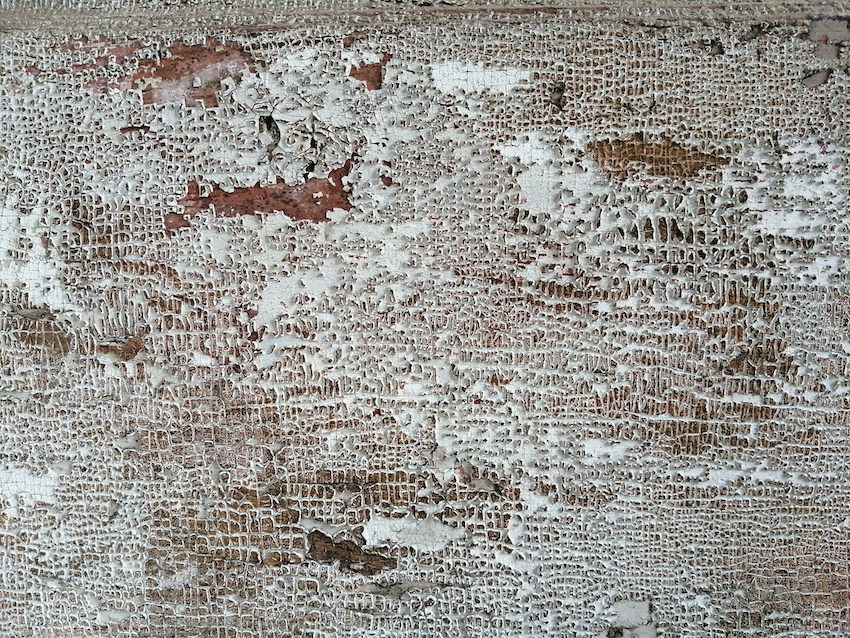
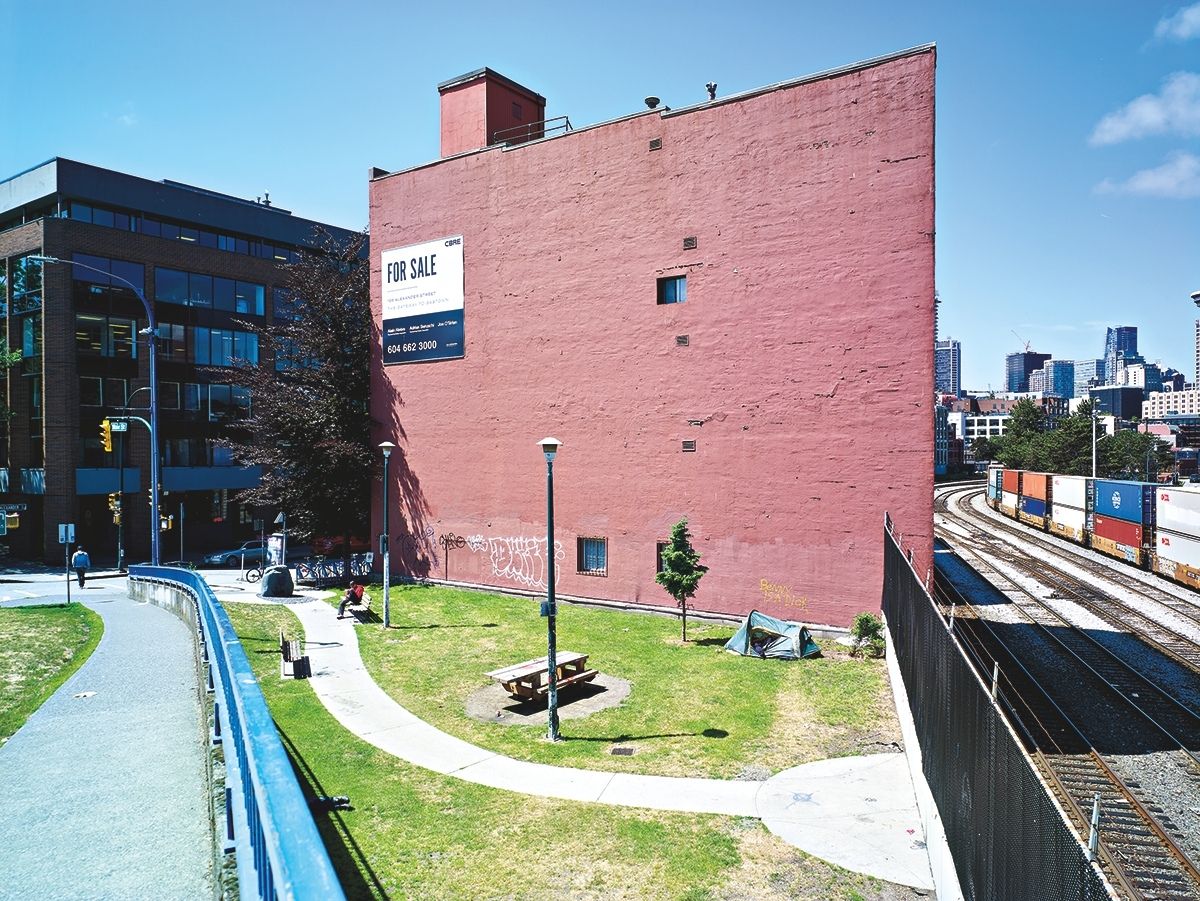
Image: Wade Comer, Wendy Poole Park ( from the series “Vancouver Park Studies”), 2023, digital C-print
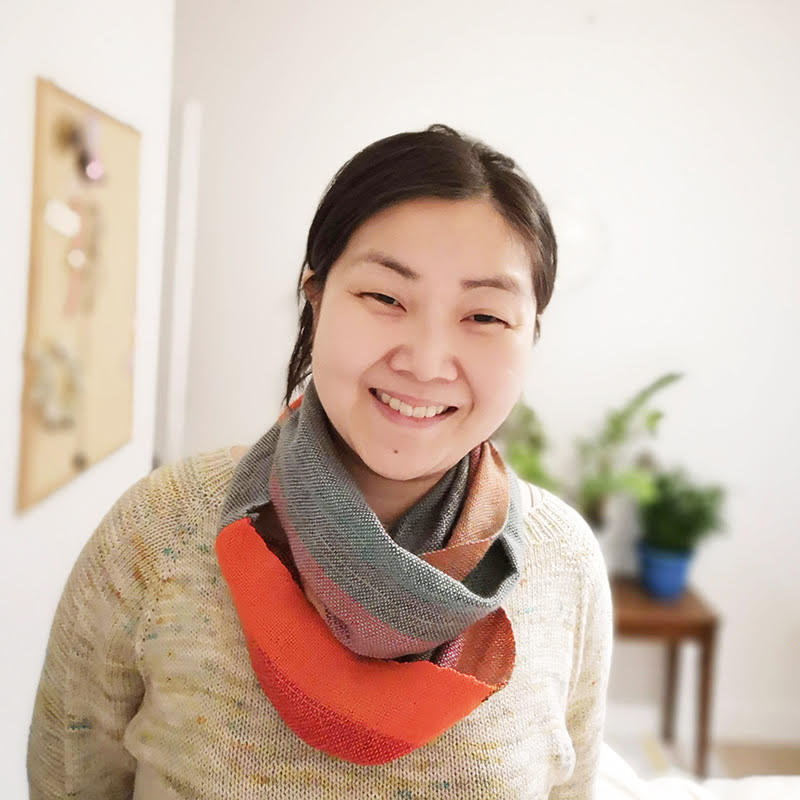
Ginger Ngo is an illustrator based in Vancouver, BC. Adventures in Desolation Sound (Harbour Publishing, 2024), written by CBC broadcaster Grant Lawrence and illustrated by Ginger, came out to rave reviews from kids who like birds. Her solo project “Emerson the Elephant Seal” will be released in 2025. Find more at gingerngo.com.
SIGNUP TO OUR NEWSLETTER

SIGN-UP TO OUR NEWSLETTER