Amongst my father’s keepsakes from his years at sea is an envelope containing the results of his final medical examination, undertaken at the seamen’s hospital in Hamburg when he was nineteen years old. Such examinations were conducted annually and were mandatory for every sailor employed as a German merchant marine. My father had been with the German merchant marines since he was fourteen. He was underage, but an uncle in Ceuta pulled some strings. My father would retire soon after this examination and return home to Spain, where he would fulfil his military obligation at a naval base in Cádiz.
This is kind of stupid, my father tells me, head bowed. He’s holding the envelope, showing it to me, not handing it to me. The envelope reads Gesundheitskarte, or Health Card. It’s dated March 1968 and remains sealed after more than half a century. We’re in his workshop. We’re going through everything. I ask my father why he hasn’t opened the envelope, why he doesn’t open it now. He explains that he decided not to open it in case it contained bad news. In those days was a lot of syphilis, he explains. Was bad, he explains. Plenty of it. He then directs my attention to a large X drawn across the back of the envelope, where the fold is sealed. That’s an X, he explains. So probably is nothing there. I don’t understand the significance of the X. I don’t understand its potential auspiciousness. I don’t tell him this. Anyway, the envelope has stayed there, like that, he explains, pointing at the small safe where his keepsakes live. And it’s going to stay there, like that, for a long time, he says. I tell him I’m going to make supper. Thank you, son, he says, head bowed. He continues to hold the envelope.
Hamburg is a city I know only from a film I saw many years ago. My experience of this film left me with the beguiling sense of having been there, in its Hamburg, a feeling not unlike that of having visited a place in dreams, a place unknown to the dreamer in waking life. The film concerns a picture framer who, following a series of circuitous events, becomes precariously involved with a dealer in art forgeries. The framer is afflicted with a rare blood disease. A rumour circulates amongst his colleagues that the framer has only a short time to live. The framer consults his doctor but does not trust his doctor’s reassurances that his condition is stable. The framer is approached by a Frenchman who finances an appointment with a specialist in Paris. Just hours after the appointment, the specialist’s report is delivered to the framer’s hotel room. The framer opens the envelope, and the diagnosis confirms the terrible rumour. The framer is overwhelmed with grief, but moments later feels a strange elation. Knowing that the framer is a modest craftsman, that he has a wife and a young child, that his diagnosis has thrown everything in his life into question, the Frenchman proposes that the framer commit a murder for him, a murder of someone whom the framer doesn’t know and who doesn’t know him, a murder for which he will be handsomely compensated, ensuring his family’s financial security in his absence.
I think of this film as the story of a man doomed by his diagnosis: Might he have been better off not opening the envelope? The film is also a portrait of a friendship, one that emerges purely by chance, between two men who share a feeling of distance from the world. I see their parallel solitudes. I see the framer sweeping up in his workshop while singing the Kinks’ “Too Much on My Mind.” I see the art dealer taking Polaroids of himself while lying on a pool table. The framer wonders if his son will remember him. He imagines his son, sometime in the future, writing, “My father had a moustache. We lived near the harbour in a building that’s been torn down.” Indeed, the building in which they live, its height and narrowness making it an ostentatious anomaly on their street, looks as though it could be slated for demolition at any moment. I see Hamburg: abandoned mansions, muddy vacant lots, little old wooden fences. Broad, cobbled avenues appearing wet even on rainless days. I hear seagulls, fog horns, trains. There is a fluorescent-lit tunnel so long that each time we see the framer traversing it, no daylight is visible at either end.
I telephone my father to wish him a happy birthday. He is seventy-four years old. Besides it being his birthday, today is Saturday, so I’m surprised to learn that he’s working. My father is a finishing carpenter. For various reasons, he’s slowed down in the last few years. He has no hobbies. He no longer makes his own wine. The jobsite is just outside the town of Canmore, Alberta, a short distance from the Three Sisters on the one side, and Banff National Park on the other. It is a beautiful, bright blue January morning, he tells me, and the highway is clean. He’s entirely alone on the jobsite, looking after a handful of minor tasks he’d rather not leave until Monday. He sounds happy to be alone on the jobsite. Our conversation is brief but energetic, beginning in Spanish before segueing into English, then returning to Spanish to sign off. Spanish remains our language for salutations, terms of endearment, inside jokes and gestures of affection. English is our language for complicated directions and queries regarding his increasingly frequent medical appointments. They count his blood cells, measure his iron levels, ask after his mental energy. He always tells them he’s feeling great, no complaints.
He will take his time today, drink his coffee, be wary of his bad shoulder and occasional dizzy spells. He will measure short distances, pencil figures upon whatever surface is in front of him, the undersides of shelves and drawers or the joints where pieces meet, then obscure those figures under veils of paint, lacquer or dust-mottled super glue. He will take the secondary highway back into the city, the one tucked between foothills to the north of the Trans-Canada. I know he won’t say as much, but I suspect there is no place he would rather be today, that this may well prove to be the best part of his day, fixing mouldings, installing shelves, hanging doors, occasionally answering his phone to accept birthday wishes in an otherwise vacant, unfinished house with no heat, water or electricity, at the mouth of the Rocky Mountains. Alone, safe, in clouds of sawdust.
Image: Aislinn Gallivan, Rocky Mountains, 2023, film
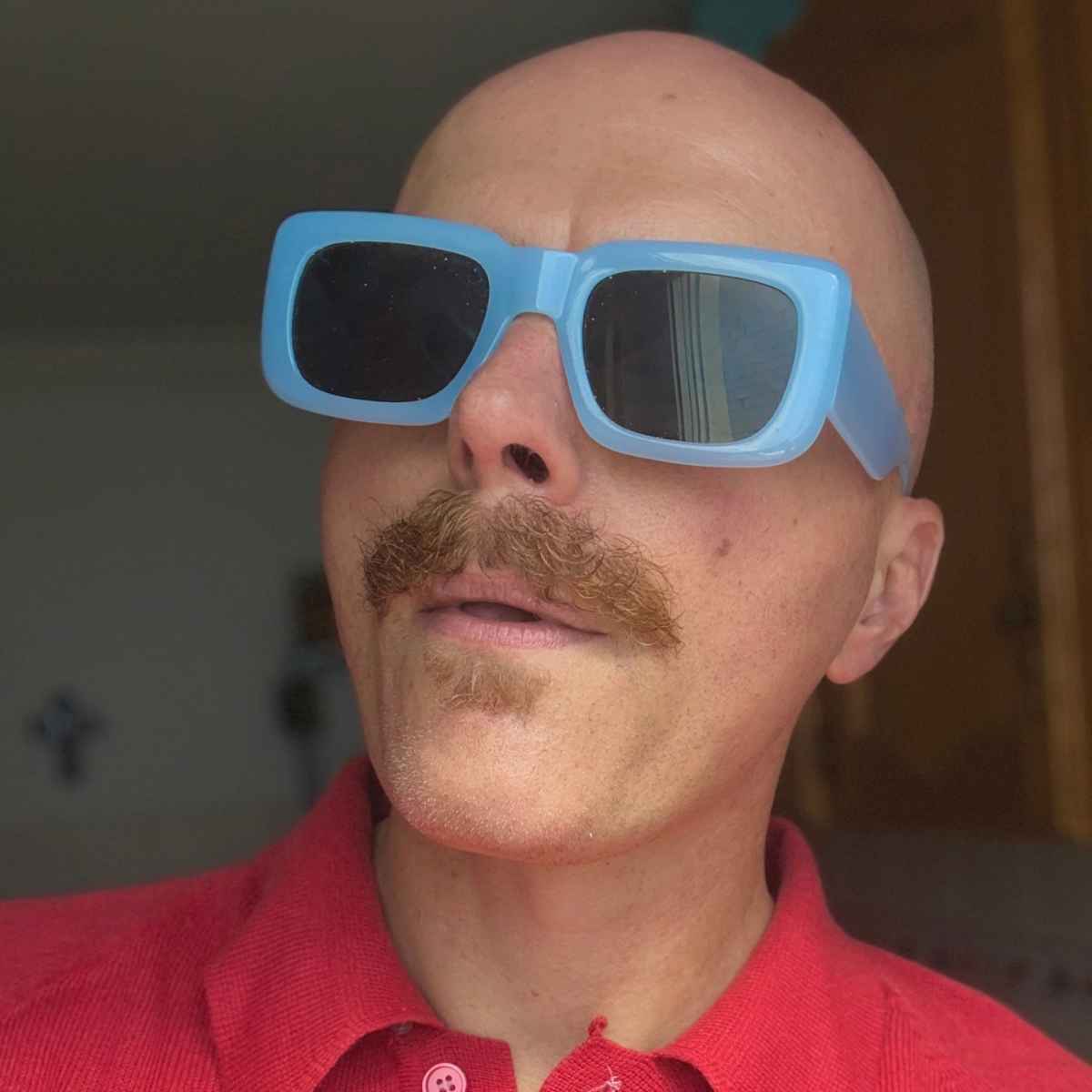
José Teodoro’s prose has appeared in Brick, The Fiddlehead and subTerrain. His performance works include Island, winner of the Lee Playwriting Prize for New Canadian Plays, and Screen Door, which provided material for the debut LP by Applied Silence, José’s group with musician-composer Stephen Lyons, and is available via Offseason Records.
SIGNUP TO OUR NEWSLETTER

SIGN-UP TO OUR NEWSLETTER