


fact

In Praise of Slow: How a Worldwide Movement is Challenging the Cult of Speed
Carl Honoré isn’t the first author to investigate the phenomenon of slow living, but his book In Praise of Slow: How a Worldwide Movement is Challenging the Cult of Speed (Vintage Canada) is the most comprehensive explanation of recent attention to s
In Her Own Words: Women's Memoirs from Australia, New Zealand, Canada & the United States
In Her Own Words: Women's Memoirs from Australia, New Zealand, Canada & the United States (Vintage), edited by Jill Ker Conway, is a book that invites browsing. All twelve of the memoirs here are excerpts of longer works, so many of the paragraphs en
I’m Special: How Individuality Became the New Conformity
In between films I read Hal Niedzviecki’s new book, Hello I’m Special: How Individuality Became the New Conformity (Penguin). It was inspired by the author’s crisis of faith in underground culture, precipitated by a Hallmark card reading “Happy Birth









.jpg)

.jpg)


Re-hanging the National Wallpaper
When I lived in Ottawa in the 1970s, I used to enjoy passing lazy afternoons at the National Gallery looking at the pictures. I remember how surprised I was when I first encountered the Group of Seven collection. These paintings were completely familiar—I’d seen them in schoolbooks and on calendars, posters, t-shirts, everywhere—yet at the same time they were completely unexpected.


.svg)









Seize the Fire: Heroism, Duty, and the Battle of Trafalgar
October 21, 2005, marked the 200th anniversary of the great naval battle of Trafalgar, an engagement in which Admiral Nelson and the British fleet ended Napoleon’s dream of invading England by crushing the French and Spanish fleets off the southwest



.svg)
Regeneration, The Eye in the Door and The Ghost Road
On my summer holiday I immersed myself in World War I, thanks to a friend who loaned me all three parts of Pat Barker's trilogy: Regeneration, The Eye in the Door and The Ghost Road (Plume/Penguin). This is a large and important work conveniently pac
River Queen: The Amazing Story of Tugboat Titan Lucille Johnstone
Eventually Lucille Johnstone told her story to Paul E. Levy, who made it into a book, River Queen: The Amazing Story of Tugboat Titan Lucille Johnstone (Harbour), an absorbing read even for people who think they’re not interested in reading about bus


Reading Writing
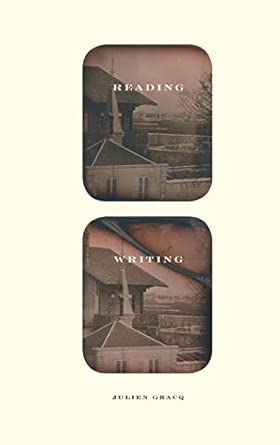
The French writer Julien Gracq, who will be ninety-seven this year, is a living link to the era of Louis Aragon and André Breton. Gracq has avoided the kind of recognition that most modern writers crave (he refused the Prix Goncourt in 1951), and his body of work is little known on this continent.
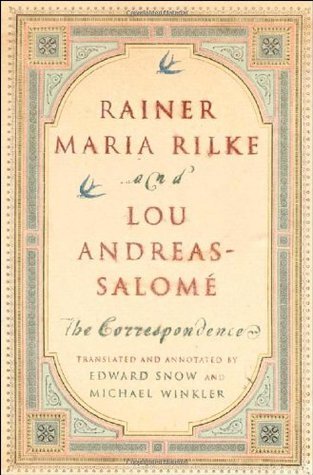
Rainer Maria Rilke and Lou Andreas-Salomé: The Correspondence
Rainer Maria Rilke and Lou Andreas-Salomé: The Correspondence (Norton) collects all of the extant letters exchanged by Rilke and Andreas-Salomé , a patron and fellow author, and (as the jacket copy describes her) “a key fin de siècle intellectual.”